AI Innovation in the Newsroom
AI Work
Five systems built from scratch — no engineering team, no budget, no dedicated project time. Just a problem, a laptop, and a willingness to ship. Plus one working exploration below.
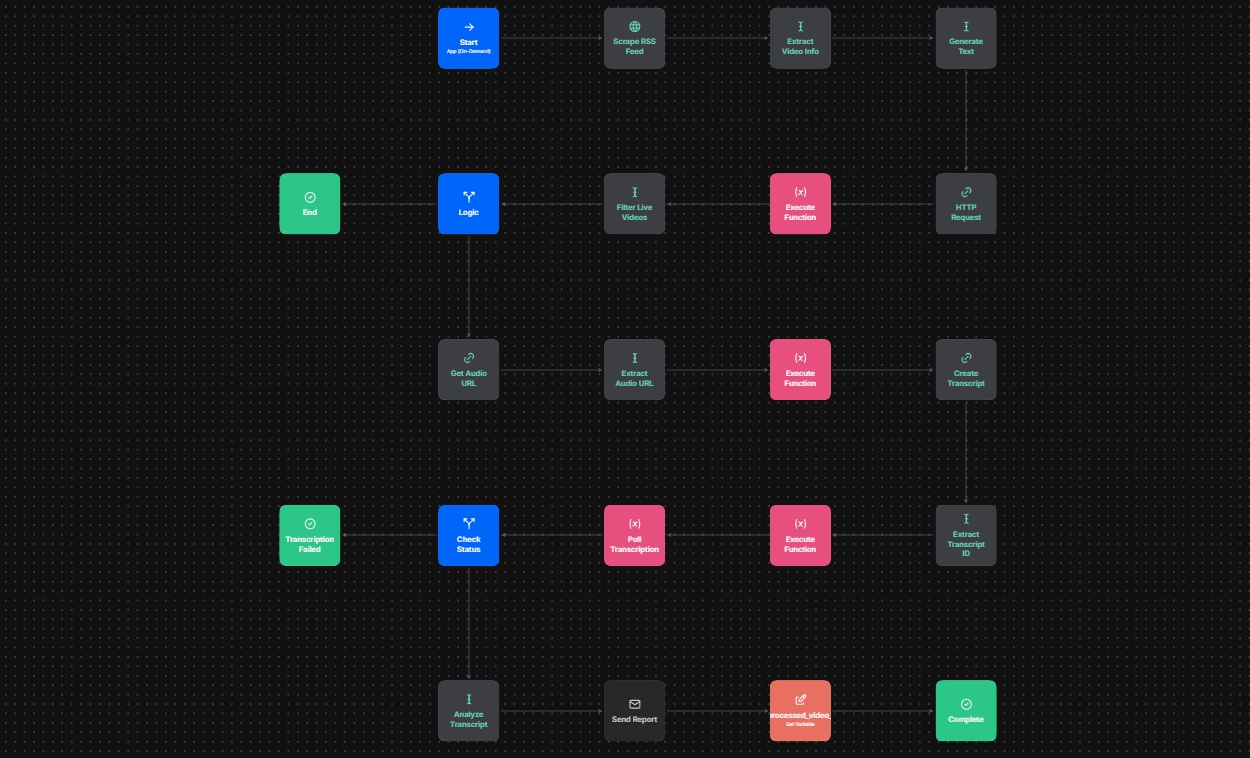
A fully automated pipeline that monitored the entire 2026 Kentucky General Assembly — 131 committee meetings transcribed, analyzed, and delivered as editorial reports without a reporter in the room. Built in MindStudio using AssemblyAI transcription and Claude for analysis. Story ideas reviewed by the EP, forwarded to reporters for assignment. Thirty-eight stories aired at $1.65 each.
Read case study →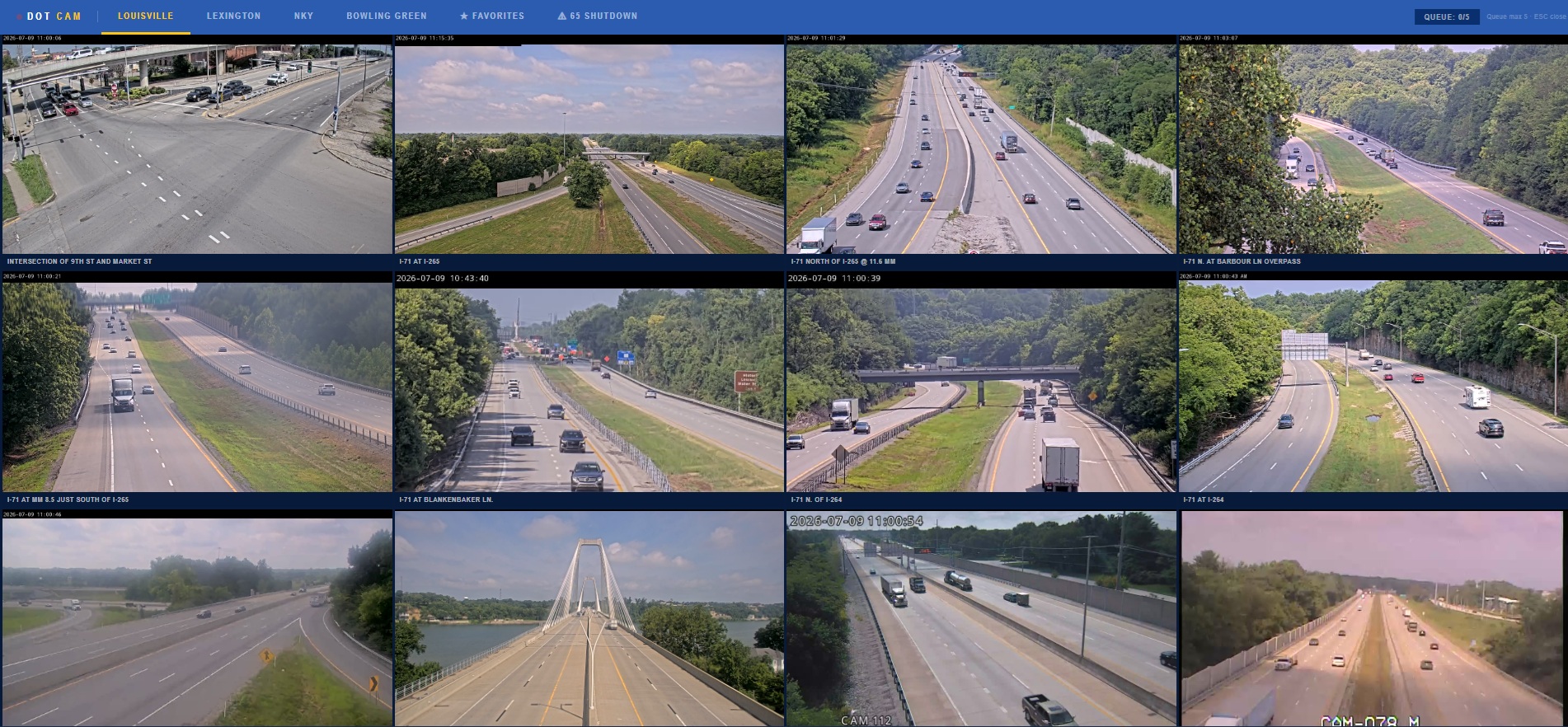
Replaced VLC Media Player with a browser-based dashboard giving producers instant visual access to 244 statewide Kentucky DOT traffic cameras. Built in 4.5 hours with no engineering support. Seven producers use it daily in the control room. Costs $18 a month to run.
Read case study →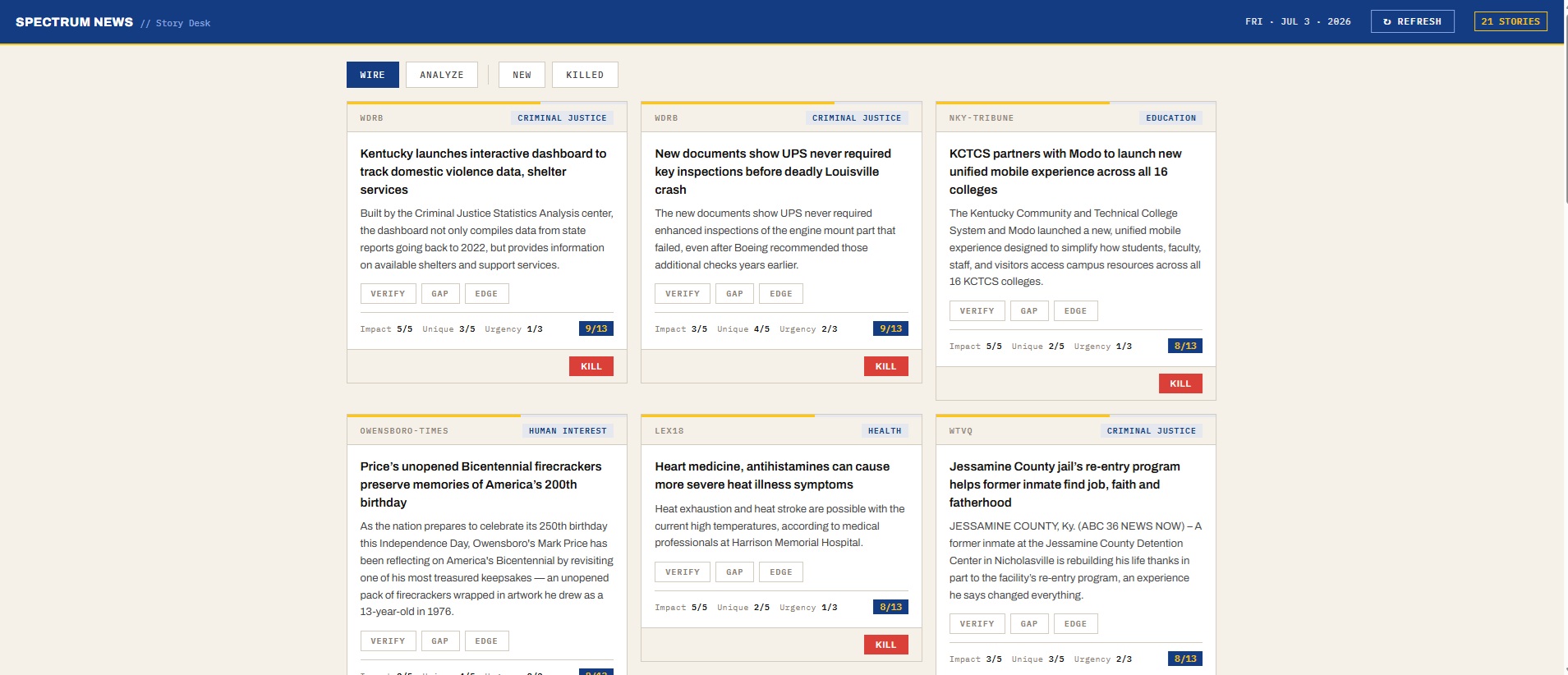
Monitors 12 Kentucky news outlets twice daily and runs every story through a two-pass editorial scoring system. Stories that clear the threshold get three AI-generated angles: the claim worth verifying, the hole in this specific report, and the systemic story hiding underneath. Built to find what's missing, not just what's there.
Read case study →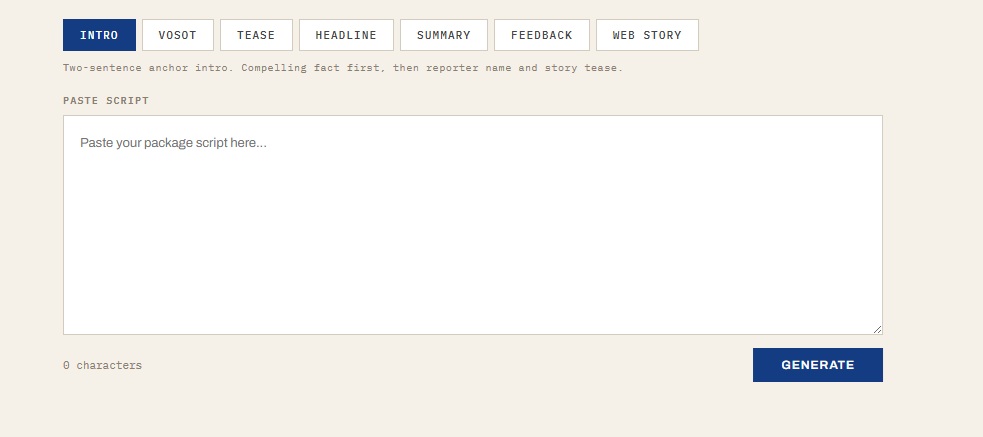
Converts any broadcast package script into seven production-ready formats — intro, VOSOT, tease, headline, summary, editorial feedback, and web story — in seconds. Prompts encode more than a decade of broadcast writing standards. Used daily. Output appears in real time via server-sent events.
Read case study →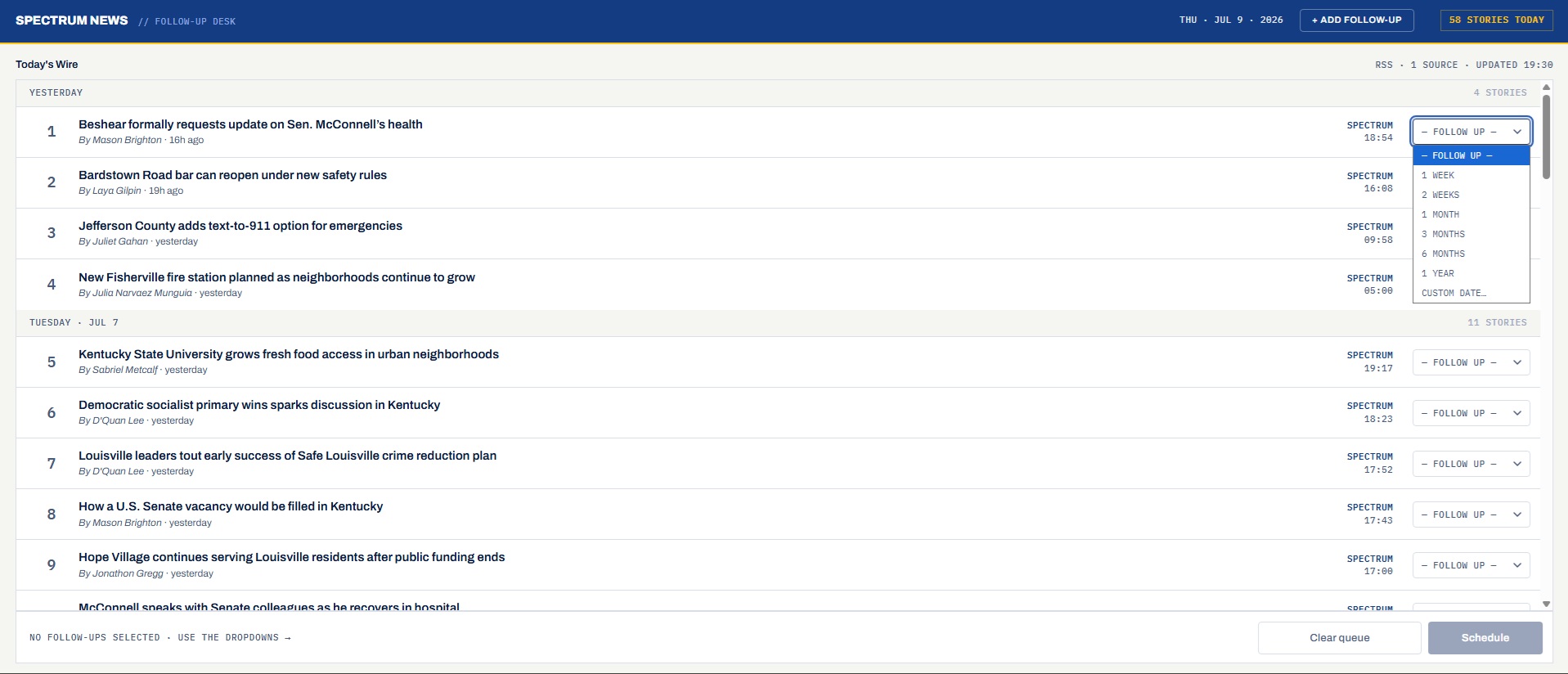
A nightly RSS capture system that queues the day's local Spectrum News stories for morning review. Tag what's worth revisiting, set an interval, and the follow-up lands on a shared Google Calendar automatically. Pre-populated with annual milestones — disaster anniversaries, mass shooting dates, recurring events — so coverage doesn't get forgotten until the day before.
Read case study →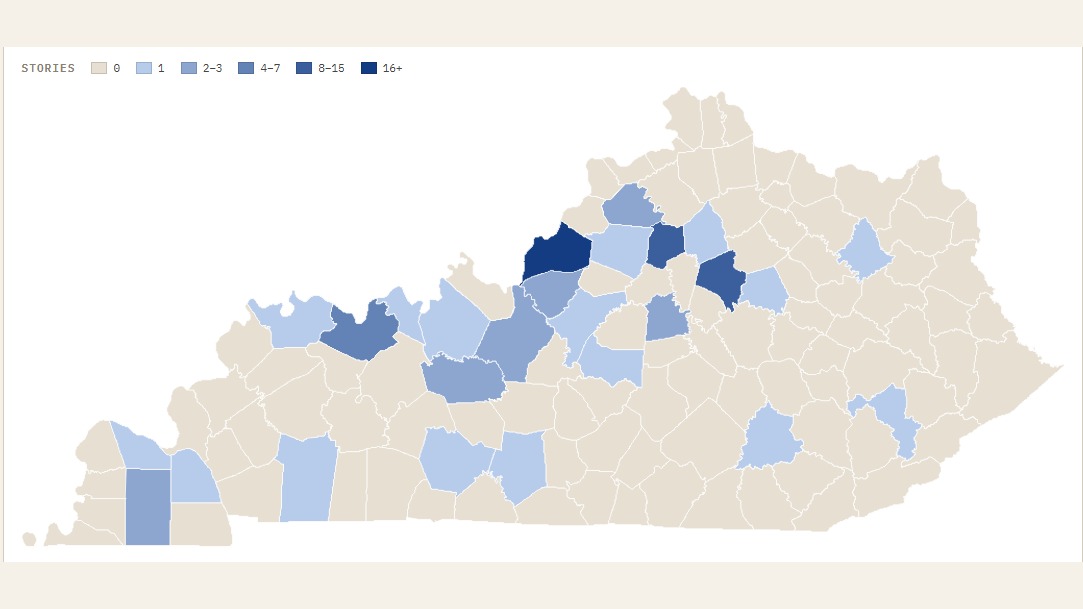
A newsroom's audience data recently got its own heat map. This asks the harder question: does our coverage actually reach where the audience is? Built on the same RSS feed powering Story Desk, it plots every published story against its Kentucky county and renders a live choropleth of where coverage lands versus where it doesn't — a quick, self-funded test of an idea, not a finished system.
View the live tool →